
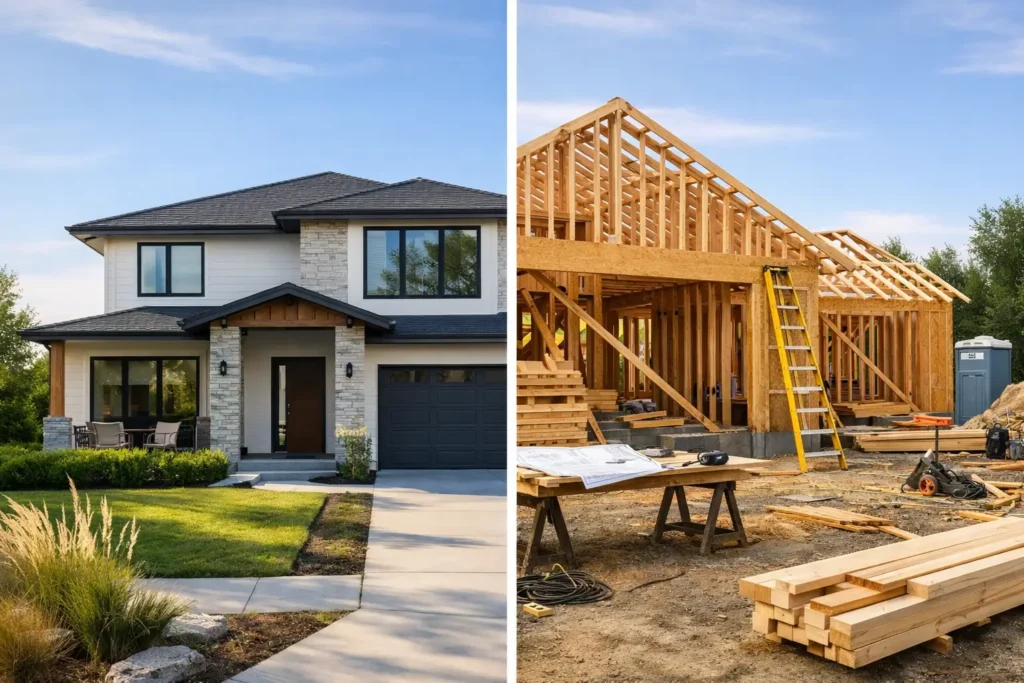
A new home should feel exciting, not like a second full-time job. For buyers across Crossville, Lake Tansi, Cookeville, Sparta, and the Cumberland Plateau, the choice often comes down to a spec home versus custom build. Both can lead to a home you love. The better option depends on how quickly you need to move, how much decision-making you want, and how closely the home needs to match your vision.
A spec home gives you a ready-made path into new construction. A custom build gives you more control from the ground up. Before you fall in love with a floor plan or a piece of land, it helps to understand what each route really asks of your budget, timeline, and energy.
What Is a Spec Home?
A spec home, short for speculative home, is built by a builder before a buyer is under contract. The builder chooses the lot, floor plan, finishes, and many of the design details based on what they believe local buyers want.
Some spec homes are fully complete and move-in ready. Others are under construction, which may allow a buyer to select a few finishes before the work is finished. You might be able to choose paint colors, flooring, countertops, or lighting, but the home’s layout and major features are usually already set.
In our area, spec homes often appeal to buyers looking for practical new construction: ranch-style homes, low-maintenance cottages, farmhouse-inspired designs, and homes with enough room for visiting family. They can be especially attractive for retirees, first-time buyers, and people relocating to Tennessee who do not want to manage every stage of a build.
What Does a Custom Build Involve?
A custom build begins with more choices. You may start with land you already own, find a build-ready lot, choose a builder, select or create a plan, and make decisions about finishes, fixtures, storage, outdoor spaces, and more.
“Custom” can mean different things. A fully custom home may be designed specifically for you. A semi-custom build may use one of a builder’s existing plans with selected changes. Both provide more flexibility than a spec home, but they also require more time, communication, and financial planning.
Custom building makes sense when the property itself matters as much as the house. Maybe you want a larger lot, room for a workshop, a view, a layout that supports aging in place, or a home designed around your daily routine. Those are meaningful reasons to build custom, not just reasons to pick different cabinet hardware.
Spec Home Versus Custom Build: The Biggest Differences
The difference is not simply “easy versus expensive.” There are trade-offs on both sides, and the best fit depends on your priorities.
Timeline and move-in date
A spec home usually wins on speed. If construction is complete, closing may follow a typical home purchase timeline. If it is nearly complete, you may have a clearer target move-in date than you would with a home starting from bare land.
A custom build takes longer because more has to happen before construction can move forward. Lot preparation, design work, permits, material availability, weather, inspections, and subcontractor schedules can all affect the calendar. A well-planned build can still go smoothly, but it is wise to leave room for delays.
If you are selling a current home, starting a new job, ending a lease, or moving to the Plateau from another state, a spec home may offer the certainty you need. If your timing is flexible, custom building may be worth the wait.
Budget and price certainty
A spec home generally comes with a clearer purchase price. You can see what is included, compare it with other homes for sale, and evaluate the value of the location, lot, and finishes before making an offer. There may still be closing costs, upgrades, or landscaping items to consider, but the main number is usually easier to understand.
A custom build can give you control over where your money goes, but every choice has a price. Higher-end finishes, changes during construction, site work, utility connections, driveway installation, and land conditions can move the budget quickly. Building on a rural or wooded lot may also involve costs that are not as visible when you first see the property.
The right question is not only, “What is the starting price?” Ask, “What is included in that price, and what could change it?” Request detailed allowances and specifications. If an allowance for flooring, lighting, or appliances is lower than what you expect to choose, your final cost may be higher.
Design freedom
This is where custom building has the advantage. You can prioritize the features that will matter to your life every day: wider hallways, a walk-in shower, a larger pantry, a home office, a screened porch, extra garage space, or a kitchen designed for family gatherings.
A spec home gives you less freedom, but that can be a relief. Many buyers do not want to spend months comparing fixtures and making hundreds of small decisions. A builder’s selected package may be current, attractive, and well suited to the local market. You get a finished home without the design fatigue.
Stress and decision-making
Custom building is rewarding for buyers who enjoy planning and feel comfortable making decisions. It also asks for patience. You will need to review plans carefully, communicate clearly with your builder, and understand what happens when you want a change after work has started.
A spec home reduces that workload. You can walk through the home, picture your furniture in the rooms, and decide based on what is already there. For many buyers, seeing the finished product creates more confidence than choosing from samples in a showroom.
Questions to Ask Before You Choose
Whether you are considering a completed spec home or a custom build on land, start with the practical details. A beautiful plan is only part of the decision.
Ask about the builder’s warranty, construction materials, included features, expected completion date, and how change requests are handled. For a spec home, find out which finishes are final and whether any items remain to be installed. For a custom build, ask for a detailed scope of work and a realistic schedule.
If land is involved, look beyond the view. Confirm road access, utilities, soil conditions, septic needs where applicable, restrictions, survey boundaries, and the cost of preparing the site. A lot that looks affordable can require significant work before a foundation is poured.
Financing deserves an early conversation, too. A conventional mortgage for a completed spec home is often more straightforward than a construction loan. Custom builds may require a construction-to-permanent loan, different draw schedules, and more documentation. Speaking with a lender before choosing a path can prevent a frustrating surprise later.
When a Spec Home Is Usually the Better Fit
A spec home may be your best choice if you need to move soon, prefer a defined purchase price, or want the benefits of new construction without managing a project. It can also be a smart fit if you are still learning the area. Buying an available home in Crossville or a nearby community lets you settle in, get to know the neighborhoods, and decide later whether a more customized property is worth pursuing.
Do not assume “spec” means generic. The right home can still have the layout, finishes, lot size, and location you want. It simply means those choices were made before you arrived.
When a Custom Build Is Worth Considering
A custom build is often the better path when you have clear must-haves that are hard to find in existing inventory. Perhaps you need a single-level layout with accessible features, want to build on family land, or have found the perfect lot near the lake, golf course, or countryside.
It may also work well for buyers who view the home as a long-term decision. If you expect to stay for many years, spending more time upfront to get the layout right can pay off in comfort and functionality. Just keep the design grounded in the local market if future resale matters. Highly personal choices can make a home harder to sell later.
Let the Home Match Your Life, Not Just Your Wish List
There is no universal winner in a spec home versus custom build decision. One buyer wants keys in hand before the holidays. Another is happy to wait for a porch positioned toward the sunset, a kitchen built for Sunday dinners, or a garage with room for a boat and tools.
The smartest next step is to define your non-negotiables, your comfortable budget, and your real move-in deadline. Then look at available new homes and buildable land with those priorities in mind. At 931 Dream Homes, we believe your dream home starts with a clear plan and a local guide who will help you move forward with confidence.