
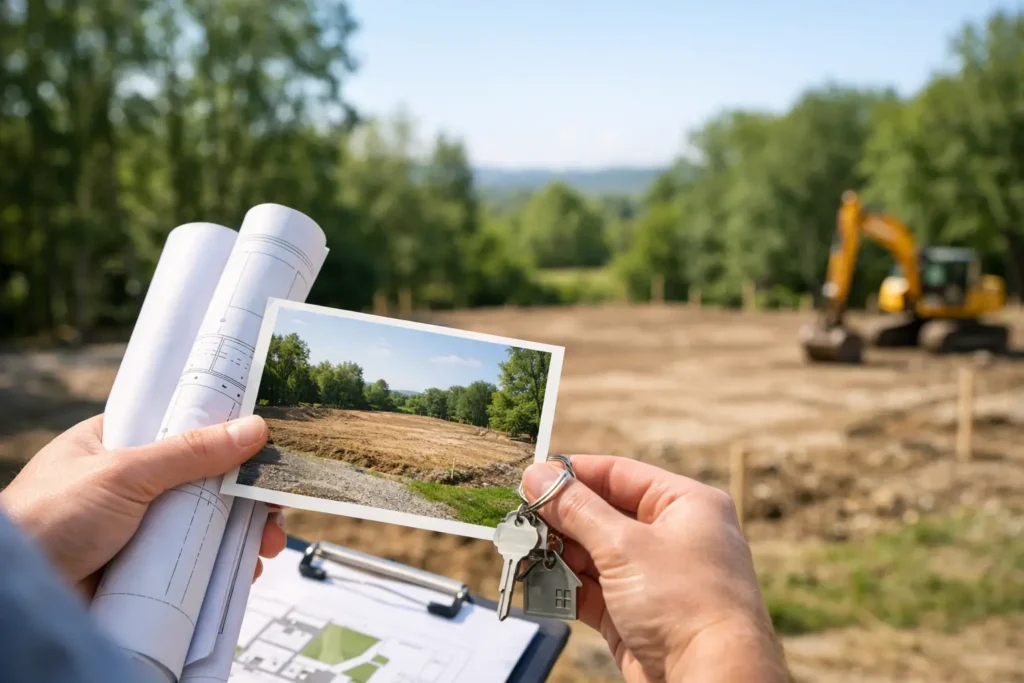
A vacant lot can look like the easy part of building a home. It may be wooded, level, and priced within reach. But learning how to buy build ready land means looking past the view and confirming what can actually be built there, what it will cost, and how long it will take.
Around Crossville, Lake Tansi, Cookeville, Sparta, Baxter, and the Cumberland Plateau, two properties with similar acreage can have very different building paths. One may be ready for a foundation and utility connections. The other may require a driveway, septic system, extensive clearing, or a costly solution for power and water. The right homework before closing protects both your budget and your dream home plans.
What “Build Ready” Should Mean
“Build ready” is a useful listing term, but it is not a legal guarantee. Ask the seller or listing agent what the phrase specifically means for that parcel. A truly build-ready lot usually has clear legal access, a buildable homesite, a realistic path to water and electric service, and approval or suitability for septic if public sewer is unavailable.
That still does not mean every buyer can place any home anywhere on the lot. Setbacks, deed restrictions, slope, drainage, flood conditions, and local rules can shape the size, location, and style of home you build. A lot prepared for a modest ranch-style home may not be ready for a larger home with a basement, detached garage, or long circular drive.
The goal is not to find a lot with zero work left. It is to understand exactly what work remains, who will perform it, and whether the total cost still fits your plan.
Start With Your Home Plan and Total Budget
Before touring land, have a practical picture of the home you want to build. You do not need final blueprints, but you should know your approximate square footage, whether you want a slab, crawl space, or basement, and whether features such as a garage, workshop, or guest space matter to you.
Those choices affect the land that works. A sloped lot might offer a beautiful setting for a walkout basement but add excavation and retaining-wall costs. A narrow lot may limit the footprint of a single-level home. A gently rolling lot with a clear building area may be the more affordable choice, even if it has less acreage.
Separate the land price from the full project budget. Buyers often focus on a low purchase price and underestimate site costs. Your planning number should account for the lot, closing costs, survey, design and permits, driveway, clearing, grading, utility connections, septic or sewer fees, foundation work, and a contingency for surprises. Land can be a wonderful value, but only when you price the whole path to move-in day.
Check the Build Site, Not Just the Property Line
A property can contain several acres but offer only a small area that is practical to build on. Walk the proposed homesite with your agent, builder, or contractor whenever possible. Look at the terrain after rain if timing allows. Water movement, soft ground, steep areas, and drainage patterns are much easier to recognize in person.
Ask where the driveway would enter, where vehicles could turn around, and where a construction crew would stage materials. Confirm that there is enough usable space for the home, parking, outdoor living area, and any septic field. Mature trees are a major attraction for many Tennessee buyers, but tree removal near the building pad can be expensive and sometimes unavoidable.
Confirm the survey and legal access
Do not assume an existing gravel lane gives the parcel permanent access. Review the survey, deed, and any recorded easements. A landlocked parcel or a vague access agreement can create financing, construction, and resale problems.
A current survey can also reveal encroachments, boundary questions, utility easements, and restrictions that are not obvious during a showing. If you are buying acreage, confirm the exact corners and understand whether fences, roads, or neighboring improvements line up with the legal boundary.
Investigate soil and septic early
Many rural and lake-area properties rely on septic systems. A successful soil evaluation is one of the most valuable pieces of information you can have before buying. The results help determine whether the lot supports a conventional septic system, needs an alternative system, or has limited options for the number of bedrooms you want.
Do not rely on a neighbor’s septic setup as proof that yours will be simple. Soil conditions can change across a short distance. If a prior septic approval exists, verify whether it is still valid, where the approved field is located, and whether it matches your planned home.
Verify Utilities in Writing
Utilities are where a “great deal” can quickly become an expensive project. Ask direct questions, then verify the answers with the providers and local offices involved. “Utilities available” can mean service runs along the road, not that a meter is installed or that connection costs are minimal.
For electric service, find out how far the nearest connection point is from the planned home location. Extension costs, poles, transformers, and right-of-way needs may fall to the buyer. For water, determine whether public water is at the road, whether a tap is available, and what connection fees apply. If a well is necessary, get local guidance on likely depth, drilling costs, water testing, and ongoing maintenance.
Internet access deserves the same attention, especially for remote workers, retirees staying connected with family, and buyers who stream or use smart-home systems. Service can vary significantly from one road to the next. Check the providers serving the exact address or parcel, rather than relying on a coverage map.
Understand Restrictions, Zoning, and Permits
Before you make an offer, identify every rule that could affect your plans. Depending on the location, this may include county requirements, city rules, subdivision restrictions, homeowners association rules, or lake-area covenants. Ask for the complete set of recorded restrictions, not just a quick verbal description.
Restrictions may address minimum home size, exterior materials, manufactured homes, short-term rentals, fencing, detached buildings, parking, and the time allowed to begin construction. Some communities are a great fit for buyers who want consistent neighborhood standards. Others offer more flexibility for a workshop, garden, or custom home. Neither is automatically better. It depends on the life you want to live on the property.
Also confirm permit requirements and who will handle them. Your builder may manage the process, but you should still know the expected timeline and fees. If you plan to buy now and build later, check whether the community has a deadline for starting construction.
Make Your Offer Protect the Due-Diligence Period
Land purchases need room for verification. Work with a local real estate professional who can help you structure an offer with appropriate contingencies and deadlines. The details depend on the property and the agreement, but the purpose is simple: give yourself time to confirm that the land works for your intended home.
During that period, speak with your builder, utility providers, septic or soil professionals, surveyor, lender, and insurance provider as needed. If financing is involved, ask the lender early about land-loan requirements and whether a construction-to-permanent loan makes more sense for your timeline. These loans often have different down payment, appraisal, and approval standards than a traditional mortgage.
A good local agent does more than open a gate for a showing. At 931 Dream Homes, the focus is helping buyers ask the right questions before a property becomes a costly commitment. That practical support matters when you are comparing land that looks similar online but performs very differently in real life.
Watch for Costs That Are Easy to Miss
Some site expenses are straightforward, while others appear only after you begin evaluating the parcel. Keep a contingency fund because grading, rock removal, drainage improvements, and utility work can change the numbers quickly.
Pay close attention to these commonly missed expenses:
- Driveway installation, culverts, and permits for a road entrance
- Clearing, stump removal, grading, and erosion control
- Septic design, installation, and any alternative-system requirements
- Water taps, well drilling, electric extension, and internet setup
- Construction insurance, carrying costs, and property taxes while building
These are not reasons to avoid land. They are reasons to compare lots by total readiness instead of acreage and asking price alone. A slightly higher-priced lot with water at the road, an approved septic area, and a usable driveway can be the smarter buy.
A Better Way to Compare Two Lots
When you are choosing between properties, create a simple side-by-side worksheet. Record the purchase price, estimated utility costs, septic status, driveway needs, clearing needs, restrictions, estimated buildable area, and the likely timeline before construction can begin. Include what you love about each property too, whether that is privacy, lake access, a convenient location, or room for family to visit.
Then ask one final question: after the site work and house are complete, will this property still support the lifestyle you came to Tennessee for? The right build-ready land should give you confidence, not a string of expensive unknowns. Take your time, verify the details, and let the lot earn its place in your dream-home plan.