
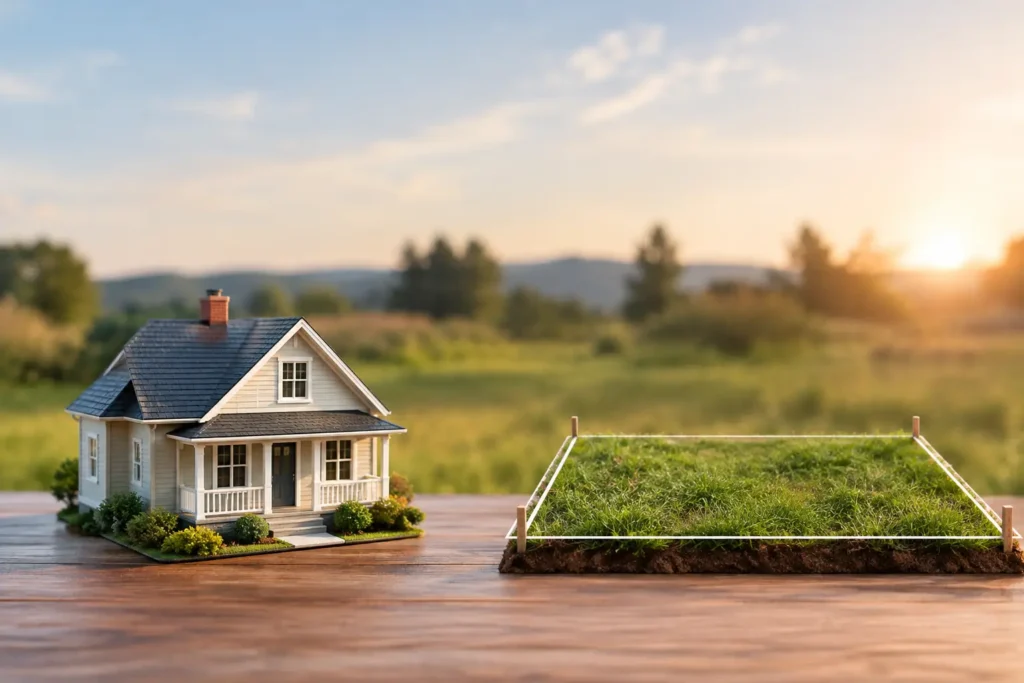
A wooded acre outside Lake Tansi can make your imagination run wild. A move-in-ready ranch in Crossville can make your next chapter feel close enough to touch. When you are weighing buying land versus buying a house, the better choice is not always the one with the lower price tag. It is the one that matches your budget, timeline, lifestyle, and willingness to take on extra decisions.
For some buyers, land is the start of a custom home, a quieter retirement plan, or a long-term investment. For others, an existing home offers the relief of having a roof, utilities, and a move-in date already in place. Both paths can lead to a great life on the Cumberland Plateau, but they ask different things of you along the way.
Buying Land Versus Buying a House: Start With Your Timeline
If you need to move within the next few months, an existing home is usually the more direct path. Once you find the right property, secure financing, complete inspections, and close, you can begin settling in. A home may need paint, updates, or a few weekend projects, but its basic systems are already there.
Land takes more patience. Even a beautiful lot may need a survey, soil testing, driveway access, utility planning, permits, and a construction loan before a foundation is poured. If you are building, the process can take many months and sometimes longer depending on contractor availability, weather, material costs, and permit timing.
That does not make land the wrong choice. It simply means land is best for buyers who can plan ahead and are comfortable managing more moving parts. If your goal is to create a home that fits your exact needs, the extra time may be well worth it.
What You Get With an Existing Home
Buying a house gives you a clearer picture of what you are paying for. You can walk through the rooms, check the storage, notice the natural light, and understand how the home sits on the lot. For first-time buyers, downsizers, and families who want a predictable move, that certainty matters.
Existing homes also tend to offer more familiar financing options. Conventional, FHA, VA, and USDA loans may be available depending on the property and your qualifications. Your lender can generally evaluate the home based on its current condition and recent sales in the area.
A house can also provide immediate lifestyle value. You may be close to downtown Crossville, area golf courses, schools, lakes, or the shopping and services you use every week. If the home has a fenced yard, workshop, garage, or established landscaping, those features are already part of the package rather than future expenses.
The trade-off is compromise. You may not get the exact floor plan, view, acreage, or finish selections you pictured. Older homes can also bring repair needs, so a thorough inspection is essential before you commit.
What You Get With Land
Land gives you flexibility that an existing home often cannot. You may be able to choose the setting, orient your future home for privacy or views, plan a larger garden, add a detached garage, or leave room for family to visit with an RV. For buyers seeking more space around Crossville, Sparta, Baxter, or the surrounding communities, that freedom can be a major draw.
A vacant lot can also be a way to secure a location before you are ready to build. Perhaps you are planning to retire here in a few years, or you want to buy while a particular area still fits your budget. Holding land can make sense when it supports a well-defined long-term plan.
Still, raw land is not a blank slate in the simple sense. The property may have restrictions, steep terrain, drainage concerns, easements, or limited road access. What looks affordable at first can become more expensive once you account for the work needed to make it build-ready.
Compare the Full Cost, Not Just the Purchase Price
A lower land price can be misleading if the lot requires major preparation. Before buying, ask what it will cost to bring in power, install a well or connect to water, arrange septic approval, create a driveway, clear trees, grade a homesite, and run internet service. On rural properties, each of these details can affect both cost and timing.
With a house, your costs may be easier to identify upfront, but they do not end at closing. Consider property taxes, insurance, utility bills, maintenance, repairs, and any homeowners association fees. A home with a low sales price but an aging roof or HVAC system may need attention sooner than expected.
For either choice, leave room in your budget for the unexpected. Buyers often focus on what a lender says they can borrow, but a more comfortable number is one that still leaves you breathing room after the keys are in your hand.
Building Costs Can Change
If you plan to build, get realistic estimates from local builders before assuming a home can be built for a certain amount per square foot. Site work, material selections, utility runs, permits, and changes made during construction can all alter the final number.
Ask whether an estimate includes the driveway, septic system, land clearing, appliances, porches, landscaping, and contingencies. A detailed estimate helps you compare land-and-build costs fairly against homes that are already on the market.
Financing Is Different for Land and Construction
Financing an existing home is often simpler because lenders have an established structure for residential mortgages. Land loans can require a larger down payment, shorter loan term, or higher interest rate than a traditional home loan. Terms vary widely based on whether the land is a small buildable lot, unrestricted acreage, or a property with limited improvements.
Building can add another layer. Some buyers use a construction-to-permanent loan, which finances the build and then converts to a mortgage after completion. This process may require approved plans, a qualified builder, an appraisal based on the completed home, and regular lender inspections during construction.
Talk with a lender early, not after you fall in love with a property. Knowing what type of financing fits your plan can prevent an expensive surprise and help you shop with confidence.
Due Diligence Matters More With Land
Never assume that a parcel is buildable just because nearby homes exist. Boundaries, utility availability, and local requirements can vary from one road to the next. Before making a land purchase, investigate these four areas carefully:
- Survey and access: Confirm the property lines, road frontage, easements, and legal access before deciding where a driveway or home could go.
- Soil and septic: If public sewer is unavailable, determine whether the land can support a septic system and where it could be placed.
- Utilities: Verify the actual cost and availability of electric, water, internet, and other services. Do not rely on a map or a neighbor’s setup alone.
- Restrictions and zoning: Review deed restrictions, homeowners association rules, minimum home sizes, manufactured-home rules, and any county requirements that affect your plans.
These steps are not meant to slow down your dream. They protect it. A little research before an offer can save you from buying a property that does not support the home you want to build.
Which Choice Fits Your Life Right Now?
Buying a house may fit you best if you value a quicker move, more conventional financing, and a clear understanding of your day-one living situation. It is often a practical fit for buyers relocating to the area, families who need room soon, and retirees who would rather spend their time enjoying Tennessee than overseeing a build.
Buying land may fit you best if you have a flexible timeline, a defined plan for construction, and a strong reason to choose your own setting. It can be especially rewarding for buyers who want privacy, acreage, a custom layout, or the ability to build in stages.
There is also a middle ground: a home on a larger lot, a fixer-upper with room to improve, or a build-ready lot in an established community. You do not have to choose between a fully finished house and raw acreage if another property type better serves your goals.
Make the Decision With Local Details in Mind
The Cumberland Plateau offers variety, which is part of what makes this decision exciting. One property may have gentle terrain and public utilities. Another may offer more acreage and privacy but require septic planning, grading, and a longer drive to town. Neither is automatically better. The right one depends on how you want to live and what you are prepared to manage.
At 931 Dream Homes, we help buyers look beyond the listing photos and ask the practical questions early. Whether you are considering a starter home, a lake-area property, or land for a future build, you deserve clear answers before you make a major investment.
The best next step is simple: write down your must-haves, your realistic move date, and the total monthly payment or project budget that feels comfortable. Those three answers will quickly show whether a house gives you the right start now or land gives you the right opportunity for later.