
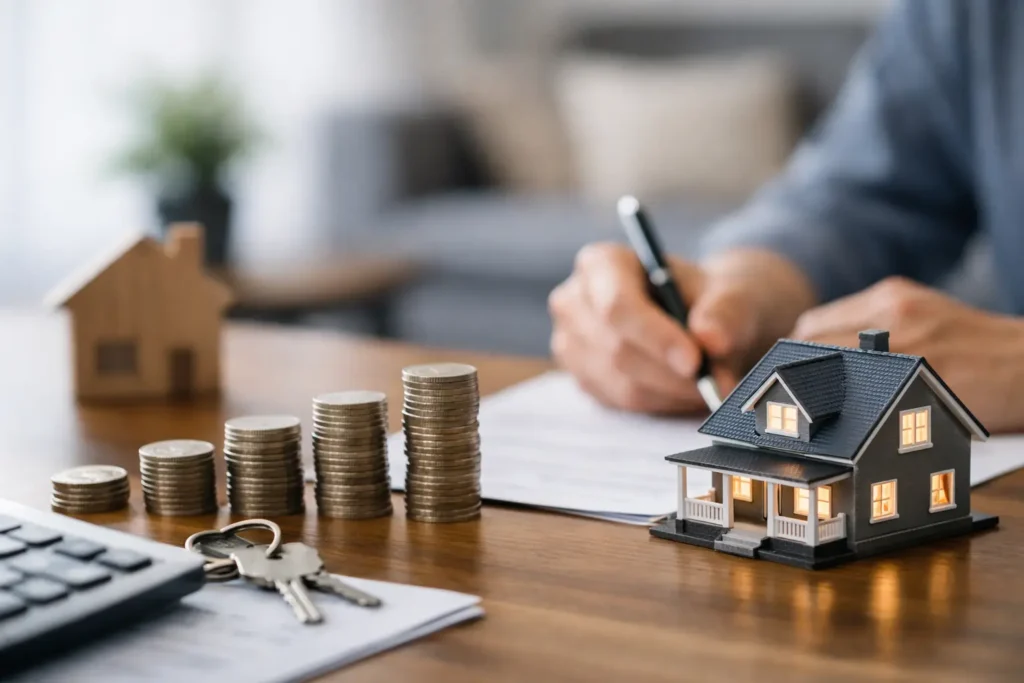
A 20% down payment can feel like the price of admission to homeownership, especially when you are watching home prices, rent, and everyday expenses at the same time. But can you buy without twenty percent down? For many buyers in Crossville, Lake Tansi, Cookeville, Sparta, and nearby communities, the answer is yes. The better question is whether a smaller down payment fits your budget, loan options, and long-term plans.
Twenty percent is still a meaningful milestone. It can lower your monthly payment, help you avoid private mortgage insurance on many conventional loans, and give you more equity from day one. It is not, however, a universal requirement to buy a home. Plenty of qualified buyers purchase with far less.
Can You Buy Without Twenty Percent Down?
Yes. Depending on your credit, income, debt, property type, and financing program, you may be able to buy with 3%, 3.5%, 5%, 10%, or even zero down. Each option has different rules, costs, and benefits.
A smaller down payment lets you buy sooner and keep more cash available for moving, repairs, furnishings, or an emergency fund. That matters when purchasing a fixer-upper, a home with acreage, or an older property that may need attention after closing. On the other hand, borrowing more means a larger loan balance and usually a higher monthly payment.
The right choice is not always the largest down payment you can possibly make. Draining every dollar from savings just to reach 20% can leave a new homeowner exposed when the water heater quits or the car needs work. A confident purchase leaves room for real life after closing.
Common Ways to Buy With Less Down
Conventional loans with 3% to 5% down
Many first-time buyers qualify for conventional loan programs with as little as 3% down. Other conventional options may require 5% down, especially depending on credit profile, occupancy, and the property itself. These loans often require private mortgage insurance, commonly called PMI, when you put down less than 20%.
PMI is an added monthly cost that protects the lender, not the buyer. Still, it is not necessarily permanent. Once you have enough equity through payments, appreciation, or a combination of both, you may be able to request that it be removed. Your lender can explain the specific rules for your loan.
FHA loans with 3.5% down
FHA financing is popular with first-time buyers because it can be more flexible with credit history and a lower down payment. Qualified buyers can put down 3.5%, although FHA loans include mortgage insurance costs. There is typically both an upfront mortgage insurance premium and a monthly premium.
For some buyers, that trade-off is worth it because it creates a realistic path into a home sooner. For others with strong credit, a conventional loan may offer a better long-term payment. This is why comparing more than one loan scenario is so helpful.
VA loans with zero down
Eligible veterans, active-duty service members, and certain surviving spouses may qualify for VA financing. VA loans can offer zero-down financing and do not require monthly mortgage insurance in the way FHA and many conventional loans do. A funding fee may apply, though some borrowers are exempt.
If you are eligible, a VA loan is worth a serious look. It can be a powerful option for buying a primary residence in Tennessee without waiting years to build a large down payment.
USDA loans with zero down
USDA loans can also provide zero-down financing for eligible buyers and eligible areas. Parts of the Cumberland Plateau and surrounding rural communities may qualify, but eligibility depends on the exact address and household income limits. The home must generally be a primary residence, and the program has property standards.
For buyers drawn to country homes, land-rich neighborhoods, or a quieter setting outside a city center, USDA financing may be one of the most useful programs to explore.
What a Smaller Down Payment Really Costs
Buying with 3% or 5% down is not automatically more expensive in every sense. It can be more expensive each month, but buying earlier may also allow you to start building equity sooner. The real comparison depends on your numbers.
With less money down, expect a larger principal and interest payment because you are financing more of the purchase price. You may also have PMI or mortgage insurance. Closing costs, homeowners insurance, property taxes, and possible homeowners association fees need to be part of the conversation too.
Here is a simple example. On a $250,000 home, a 20% down payment is $50,000. A 5% down payment is $12,500. The lower down payment preserves $37,500 in cash, but it also means financing an additional $37,500, plus possible PMI. For a buyer with stable income and healthy savings, that may be a manageable and worthwhile trade-off. For someone already stretched by the monthly payment, it may be a sign to consider a lower price point or save longer.
Interest rates matter as well. A loan with a lower down payment is not always assigned a dramatically higher rate, but rates and loan pricing vary by lender and borrower profile. Ask for written estimates based on the same home price and compare the total monthly payment, cash needed at closing, and estimated cost over time.
Do Not Forget Closing Costs and Reserves
Down payment is only one part of the cash needed to buy a house. Buyers also need to plan for closing costs, which can include lender charges, title services, prepaid taxes and insurance, appraisal fees, and more. The amount varies by loan and transaction.
In some cases, a seller may agree to contribute toward a buyer’s closing costs. That can be especially helpful when a buyer has enough saved for the down payment but needs help covering upfront fees. The property, market conditions, loan guidelines, and offer terms all affect what is possible.
You may also find down payment assistance programs through state, local, or nonprofit resources. These programs can change, have income limits, and may require education classes or specific loan types. They are worth investigating early, not after you have already found the house you love.
Just as important, keep a reserve fund. New construction can reduce the chance of immediate repairs, but it still comes with moving expenses, window coverings, landscaping, and utility setup. Older homes and fixer-uppers can offer great value, yet they deserve extra breathing room in the budget.
When Waiting for 20% May Make Sense
There are times when holding off is the smart move. If your monthly payment would leave little room for savings, if high-interest debt is weighing down your budget, or if your credit needs work, a little preparation can make a big difference.
Waiting may also make sense if you are uncertain about staying in the area for more than a few years. Buying and selling involve transaction costs, and a home purchase works best when it supports your lifestyle, not just a deadline.
But waiting solely because you assume 20% is required can cost you time unnecessarily. A buyer paying rent while trying to save a large down payment may find that prices, rents, or interest rates change along the way. There is no crystal ball for the housing market. The goal is to make a decision based on your current finances and realistic plans.
Start With a Clear Buying Plan
Before touring homes, talk with a trusted lender about several down payment options. Ask what payment looks like at 3%, 5%, 10%, and 20% down. Ask how mortgage insurance works, what credit score affects your choices, and how much cash you should keep after closing.
Then match the financing to the kind of home you want. A move-in-ready ranch home may call for a different budget than a lake-area cottage, a new build, or a fixer-upper with strong potential. The home price is only the starting point. Condition, insurance, taxes, location, and future repair needs all shape the right number.
At 931 Dream Homes, the goal is to help buyers look at the full picture and move forward with confidence. You do not need to have 20% down before you start asking questions. You just need an honest plan, the right guidance, and a home payment that still lets you enjoy the life you are building in it.