
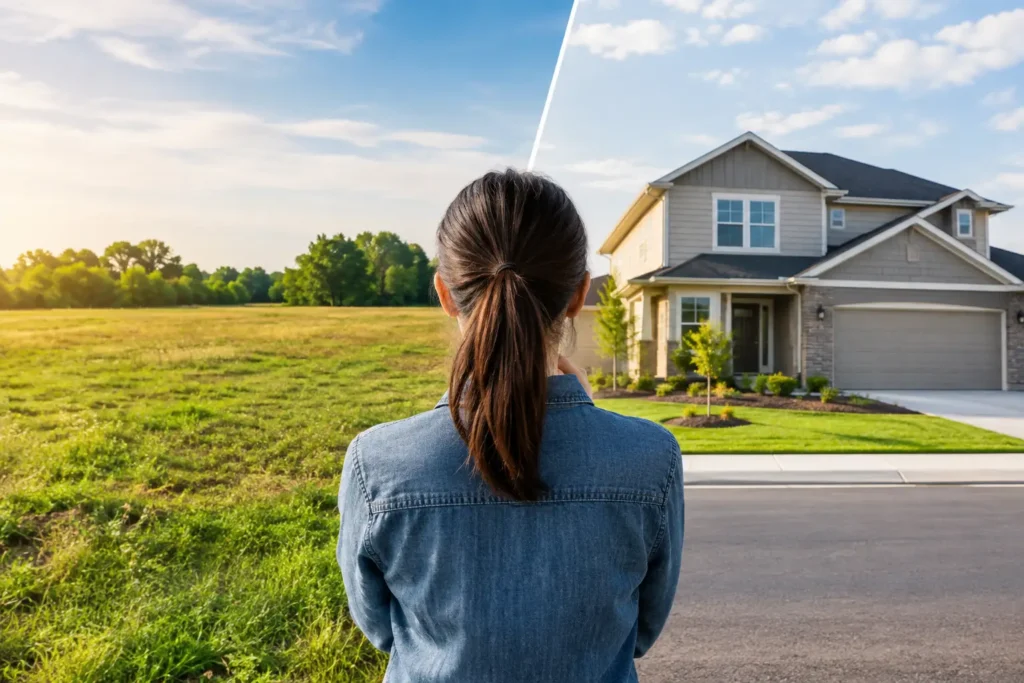
A quiet road, a wooded lot, room for a garden, and a home designed around your life – that picture is a big reason buyers move to Crossville, Lake Tansi, Sparta, Cookeville, and the surrounding Cumberland Plateau communities. But buying land versus new construction is not simply a choice between two types of property. It is a decision about how much time, flexibility, and responsibility you want to take on before moving in.
For some buyers, a newly built home offers a clean, straightforward path to homeownership. For others, land is the opportunity to create something personal and build value over time. The right answer depends on your budget, your timeline, and how involved you want to be in the process.
Buying Land Versus New Construction Starts With Your Goal
Start by getting clear on what you want this purchase to do for you. If you need to move within a few months, want predictable costs, and would rather avoid coordinating contractors, a completed new construction home may be the better fit. You can tour the home, review the features, understand the neighborhood, and move toward closing with fewer unknowns.
Land can be a great choice when location and freedom matter most. Maybe you want more privacy than a typical subdivision provides. Maybe you are planning a retirement home, a cabin near the lake, a small homestead, or a future investment property. Buying a lot now can give you time to plan the home you really want instead of settling for what happens to be available today.
There is also a middle ground. Some buyers purchase a build-ready lot in a development with utilities in place and choose a builder from a short list. Others find a spec home that is still under construction and can select a few finishes before it is completed. Those options can offer some personalization without taking on the full complexity of a custom build.
What a New Construction Home Can Offer
New construction appeals to buyers for good reason. A newer home often comes with current building standards, energy-efficient systems, modern layouts, and less immediate maintenance. For a first-time buyer, busy family, or downsizer who wants an easier transition, that peace of mind can be worth a lot.
A completed or nearly completed new build also makes financing simpler in many cases. Traditional mortgage options are usually more familiar than construction loans, and an appraisal has a finished home to evaluate. You are not waiting on a builder’s schedule before you can settle in.
New homes are not automatically worry-free, though. The price on the listing is only part of the picture. Ask what is included: appliances, landscaping, driveway, mailbox, window coverings, fencing, and any upgrades can affect your final number. In a new neighborhood, you should also understand whether nearby lots are still being developed and how that may affect traffic, noise, or future views.
Before closing, buyers should still arrange a professional inspection. New does not mean perfect. An inspection gives you another set of eyes on the home’s structure, systems, drainage, and finishing details before the keys change hands.
When New Construction Makes the Most Sense
A new build may be your strongest option if you have a firm move date, prefer a lower-maintenance home, or want to know your monthly housing costs as clearly as possible. It can also work well when you find the right location and floor plan without needing extensive changes.
For buyers who value predictability, a finished home usually has fewer moving pieces than purchasing raw land and building from the ground up.
What to Know Before Buying Land
Land can feel simple at first glance. You see acreage, trees, road frontage, or a beautiful view, and it is easy to imagine a home there. The details beneath that view are what determine whether a lot is truly ready for your plans.
First, verify legal access. A property should have reliable, documented access from a public road or a properly recorded easement. Then look at utilities. Is public water available? Will you need a well? Is there sewer service, or does the property need a septic system? If septic is required, the soil and site must be suitable for it. A successful perc test or approved septic evaluation is a major step, not a minor detail.
Topography matters, too. A sloped lot may offer a beautiful setting, but it can require extra grading, drainage work, retaining walls, or a more specialized foundation. A low price on land can quickly change once site preparation begins. Flood zones, creek areas, rock, and heavily wooded sections may all influence what it costs to build.
Restrictions deserve just as much attention. Some lots have zoning requirements, deed restrictions, minimum home sizes, architectural rules, or limits on manufactured homes, short-term rentals, livestock, and outbuildings. These rules are not necessarily a problem. In fact, they can help protect a neighborhood’s character. You simply want to know them before you purchase.
The Cost That Does Not Show Up on the Sign
When comparing land to a new home, do not compare only the list prices. A lot priced well below a finished house may still need substantial investment before construction can begin.
Your budget may need room for a survey, soil work, permits, driveway installation, utility connections, clearing, grading, well drilling, septic installation, and construction financing. The actual home price is only one part of the project. It is smart to keep a contingency fund because site conditions sometimes reveal surprises after the work starts.
That does not mean land is the more expensive route. It means the numbers need to be complete. A level, build-ready lot with water and electric nearby may be a very different opportunity than rural acreage with no improvements in place.
Time Is a Real Part of the Price
A new construction home that is complete or close to completion can often move on a normal purchase timeline. A custom build generally takes longer, and raw land may take longer still if it needs testing, permits, utility planning, and site work before the builder begins.
Weather, material availability, contractor schedules, and inspection timing can all affect a build schedule. Buyers should ask builders for realistic milestones rather than relying on a best-case completion date. If you are selling another home, renting month to month, or relocating for work, timing deserves the same attention as the purchase price.
On the other hand, time can be an advantage for the right buyer. If you are not ready to build immediately, purchasing land now may let you secure a location you love while you save, refine your plans, or prepare for a later move. This can be especially appealing in lifestyle-focused areas where desirable lots near lakes, golf, or wooded surroundings are limited.
Financing Looks Different for Each Path
Most buyers understand a standard mortgage for a finished home. Land and construction financing can require more planning. Vacant-land loans may involve larger down payments and shorter terms than a typical home loan. Construction loans may require approved plans, a signed builder contract, detailed specifications, and a draw schedule that releases funds as work is completed.
Talk with a lender early, preferably before making an offer. Ask what they require for the specific kind of property you are considering. If you plan to buy land first and build later, confirm whether the lender offers a path that works for both phases.
It is also wise to review property taxes, homeowners association fees if applicable, insurance costs, and the cost of maintaining a larger property. A home that feels affordable at closing should still fit comfortably into your life after closing.
Choose the Path That Supports Your Next Chapter
There is no one-size-fits-all winner between land and new construction. A ready-to-move-in home can bring speed, simplicity, and confidence. Land can bring privacy, flexibility, and the chance to build around the way you want to live. The better choice is the one that matches your timeline, finances, and tolerance for decisions along the way.
Before you commit, walk the property, ask direct questions, and look beyond the listing price. A local real estate guide can help you compare build-ready lots, developing neighborhoods, and completed new homes across the Crossville area. At 931 Dream Homes, the goal is to help you make a clear, confident choice – then get you one step closer to hearing the word SOLD.