
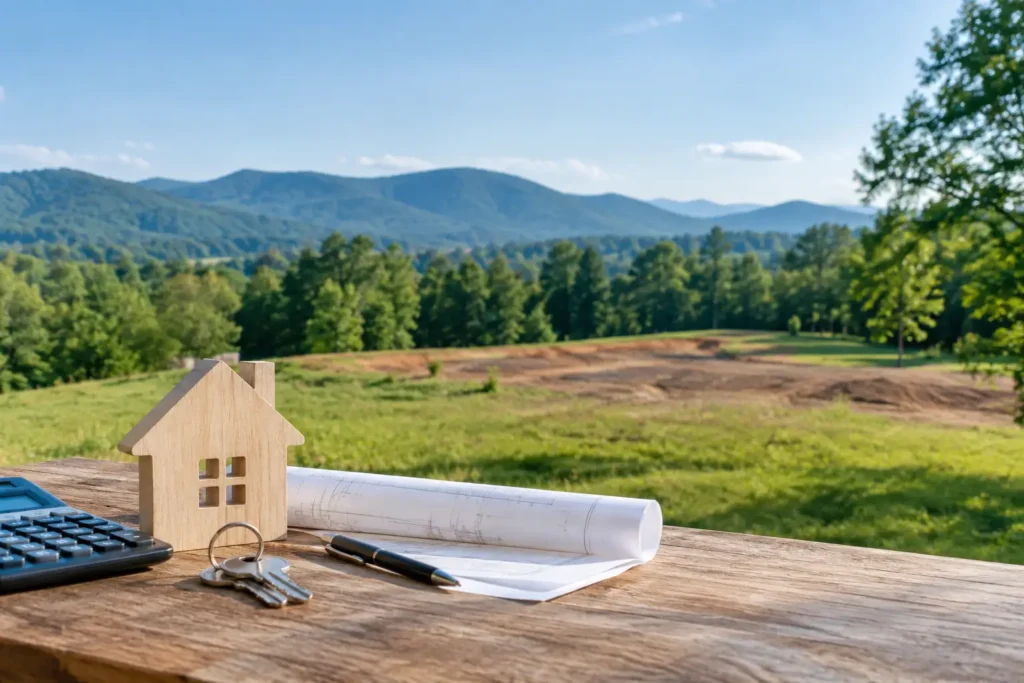
A beautiful piece of land can feel like the first real step toward your dream home. But financing a buildable residential lot works differently than financing a home that is already standing. Lenders look closely at the land itself, your plans for it, and how soon you expect to build.
For buyers around Crossville, Lake Tansi, Cookeville, Sparta, and the Cumberland Plateau, getting the financing piece right early can save time, protect your budget, and keep a great lot from slipping away. Here is what to expect before you make an offer.
Why lot financing is different
A house gives a lender established value and collateral. A vacant lot has more unknowns. Can it support a septic system? Is there public water at the road? Is the driveway practical? Are there restrictions that affect the home you want to build?
Because of those questions, lot loans often require a larger down payment and may carry a higher interest rate than a conventional mortgage. Terms can also be shorter. That does not mean land financing is out of reach. It simply means you should prepare for a more detailed conversation with a lender.
The most financeable parcels are generally build-ready lots with clear access, utilities nearby, a satisfactory survey, and no major concerns with soil, drainage, or restrictions. Raw acreage without road frontage, utility access, or a defined building site can be harder to finance and may require a different strategy.
Your main options for financing a buildable residential lot
The best loan depends on whether you plan to build soon, whether you already own a home, and how much cash you want to keep available for site work and construction.
A standalone land loan
A land loan is designed specifically for the purchase of vacant property. Local banks and credit unions are often a strong starting point because they understand the area and may be more familiar with rural properties, private roads, wells, and septic systems.
Expect many lenders to ask for 20% to 30% down, although requirements vary. They may also want to know whether the land is zoned or restricted for residential use and whether it has legal access. A shorter repayment period is common, so review the monthly payment carefully rather than focusing only on the purchase price.
A construction-to-permanent loan
If you are ready to build within the near future, a construction-to-permanent loan may be a better fit. This type of financing can combine the lot purchase and construction costs into one loan process. During construction, funds are released in stages as work is completed. After the home is finished, the loan converts to a long-term mortgage.
This option can simplify the path from lot to new home, but it requires more upfront planning. You will typically need a builder, house plans, a detailed budget, and a timeline before final approval. It works best for buyers who have moved beyond the “someday” stage and are ready to make decisions.
Using equity from your current home
Some buyers use a home equity loan, home equity line of credit, or cash from a home sale to purchase land. This can make an offer stronger and may avoid the limits of a standalone land loan.
The trade-off is risk. Borrowing against your current home should be weighed carefully, especially if your new build timeline is uncertain or your budget is already stretched. Leave room for the costs that come after closing on the lot.
Seller financing
Occasionally, a seller may offer financing directly to a buyer. This can be useful when conventional land financing is not the right fit, but the terms deserve careful review. Interest rate, balloon payment timing, title transfer, default provisions, and who pays taxes or insurance should all be clearly documented by the appropriate professionals.
Seller financing can create opportunity, but it is not automatically the cheaper or safer choice. Compare it against bank financing before deciding.
What lenders want to see
Before applying, gather a clear picture of both your finances and the property. Lenders commonly review your credit, income, debt-to-income ratio, cash reserves, and the source of your down payment. They may also ask for tax returns, bank statements, and documentation for self-employment or retirement income.
For the lot, be ready to provide the purchase contract, listing information, survey if available, and details about road access and utilities. If you already have plans to build, share the builder information, estimated construction costs, and preliminary plans.
A lender is not just asking, “Can this buyer make a payment?” They are also asking, “What happens if this property needs more work before a home can be built?” The more clearly you can answer that question, the smoother the process tends to be.
Do not confuse vacant land with buildable land
A lot can look perfect from the road and still create expensive surprises. This is where careful due diligence matters most.
Start with access. Confirm the parcel has legal, recorded access, not simply a driveway someone has always used. Then look at utilities. Public water and sewer can be a major advantage, but many beautiful Tennessee properties rely on wells and septic systems. If septic is needed, ask about soil testing, a septic permit, and the approved number of bedrooms. A failed soil test can change the entire value of the property.
Also check flood zones, easements, deed restrictions, minimum home sizes, manufactured-home rules, and homeowners association requirements. On sloped or wooded land, consider clearing, excavation, drainage, retaining walls, and driveway installation. These are real costs, and they are often not included in the land price.
A low-priced lot may be a great deal. Or it may need $40,000 or more in site work before construction can begin. Knowing which situation you are buying into makes all the difference.
Build a budget beyond the purchase price
Your down payment and closing costs are only the beginning. Buyers should create a separate site-preparation budget before committing to land. Depending on the property, that budget may include survey work, soil testing, septic installation, a well, utility connections, driveway construction, clearing, grading, permits, and impact fees.
Ask your builder for realistic local estimates. Costs vary widely across the Cumberland Plateau based on terrain, distance to utilities, and the condition of the existing road. A builder who says they need to walk the property before pricing is not slowing you down. They are helping you avoid guesses.
It is also smart to keep a contingency fund. Land and construction both involve variables, particularly on rural or wooded parcels. A little financial breathing room can keep an unexpected issue from turning an exciting purchase into a stressful one.
Steps to take before making an offer
Start with a conversation with a lender that regularly handles land or construction loans. A general prequalification is helpful, but ask specifically about lot-loan down payment requirements, term lengths, property standards, and whether the lender will later finance construction.
Next, decide on your timeline. Are you buying a lot to build on within 12 to 24 months, or are you securing a future homesite? Neither answer is wrong, but it affects which financing option makes sense and how much carrying cost you should accept.
Then, view the land with your future home in mind. Stand where the house might sit. Consider the road, sun exposure, privacy, slope, and the path utilities may need to take. If possible, involve a builder before the inspection period ends. Their perspective can be worth far more than the cost of an early site visit.
Finally, write an offer that gives you enough time for inspections, financing, survey review, and septic or utility investigation when needed. A quick closing is appealing, but skipping the right checks is rarely worth the risk.
A local plan makes the difference
The right lot is more than a parcel on a map. It is the foundation for the home, lifestyle, and budget you are building toward. Whether you picture a quiet cottage near Lake Tansi, a new ranch home outside Crossville, or a family home with room to grow, the financing should support that goal instead of putting pressure on it.
931 Dream Homes can help you evaluate available land with practical questions in mind, so you can move forward with confidence. Your dream home starts with a smart piece of ground – and a plan that leaves room to enjoy the journey.