
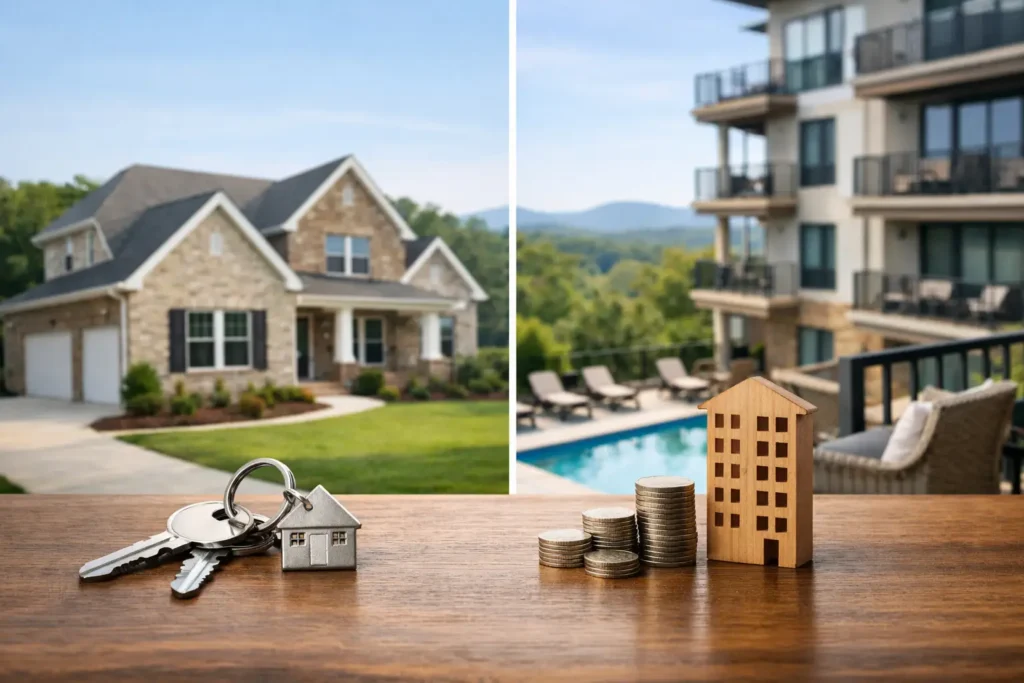
A lease renewal can feel easy – until the rent increases, the landlord plans to sell, or you realize another year has passed without building anything of your own. When you are weighing buying versus renting in Tennessee, the right answer is not the same for every household. It depends on how long you plan to stay, what you can comfortably afford each month, and the kind of life you want to build in places like Crossville, Cookeville, Sparta, Lake Tansi, Baxter, or Holiday Hills.
For some buyers, a home means room for a garden, a workshop, visiting family, or a dog that needs a real backyard. For others, renting is the smart move while they pay down debt, change jobs, or learn which community feels like home. The goal is not to rush into a purchase. It is to make a confident decision that supports your next chapter.
Buying Versus Renting in Tennessee: Start With Your Timeline
Your expected length of stay is one of the biggest decision points. Buying comes with upfront costs, including your down payment, closing costs, inspections, moving expenses, and any immediate repairs or furnishings. Those costs can make ownership less attractive if you expect to move again soon.
If you expect to stay in the same area for several years, buying may give you time to build equity and spread those initial costs over a longer period. This is especially worth considering for buyers relocating to the Cumberland Plateau for retirement, a quieter pace, lake access, or more space than they could find in a larger metro area.
Renting can be a better fit if your work situation is changing, you are still exploring towns, or you need the flexibility to move quickly. A renter who is unsure whether they prefer downtown Crossville, a rural property outside town, or a Lake Tansi lifestyle may benefit from taking time before committing. Flexibility has value too.
Look Beyond the Monthly Payment
A mortgage payment is not the full cost of owning a home, just as rent is not always the full cost of leasing one. A strong decision compares the complete monthly picture.
Homeowners should plan for principal and interest, property taxes, homeowners insurance, utilities, maintenance, and possible homeowners association fees. If you are looking at a new construction home, maintenance may be lower in the early years, but you still need room in your budget for the unexpected. If you are considering a fixer-upper, repairs and renovations should be part of the plan from day one, not an afterthought.
Renters may have fewer repair responsibilities, but rent can rise at renewal time. There may also be pet fees, deposits, renter’s insurance, utility costs, and restrictions on how you use the property. You may save money by renting, but you also may have less control over the home itself.
The best question is not, “Can I qualify for this payment?” Ask, “Can I make this payment comfortably while still saving, handling repairs, and enjoying my life?” A home should support your goals, not stretch every dollar too thin.
Build a realistic ownership cushion
Before buying, it helps to keep money available after closing. The exact amount will vary, but homeowners need a cushion for a water heater, appliance replacement, tree work, vehicle repairs, or a surprise medical bill. This matters even more with older homes and rural properties, where wells, septic systems, driveways, or outbuildings may need attention over time.
A solid cash reserve does not mean you have to wait for every financial detail to be perfect. It means you are buying with a plan instead of hoping nothing goes wrong.
Ownership Gives You Control – and Responsibility
One of the strongest reasons to buy is control. You can paint the walls, update the kitchen, build a deck, plant fruit trees, or create the hobby space you have wanted. For buyers seeking land, ownership can also open the door to a future custom home, a small homestead, or an investment-minded purchase with long-term potential.
That freedom comes with responsibility. When the roof leaks or the HVAC stops working, there is no landlord to call. You choose the contractor, approve the work, and pay the bill. Some people love that independence. Others would rather have maintenance handled for them while they focus on other priorities.
Be honest about your comfort level. If you enjoy projects and want to improve a property over time, a home or fixer-upper may be exciting. If you travel often, prefer minimal upkeep, or do not want weekend repair projects, a rental or low-maintenance property may be the better match.
Tennessee Location Changes the Equation
Real estate is local. A buying decision that makes sense in Nashville or Knoxville can look very different in Crossville and the surrounding communities. Smaller-city and lifestyle-focused markets often give buyers more options to consider, including ranch homes, cottages, new builds, lake-area properties, and land.
That variety is a real advantage, but it also means buyers should be clear about what matters most. A home with acreage may offer privacy and room to grow, while a property closer to town may make errands, healthcare, dining, and community activities easier. Lake-area living can be beautiful, but buyers should understand the specific property features, access, maintenance needs, and any community rules before moving forward.
For retirees and downsizers, the right purchase may be a single-level home that reduces stairs and upkeep. For a growing family, it may be a new build with predictable maintenance and extra bedrooms. For an investor-minded buyer, it may be a home with improvement potential or a build-ready lot. There is no one-size-fits-all Tennessee home path.
When Renting May Be the Smarter Move
Buying is not automatically the best financial choice simply because it builds equity. Renting may be the wiser move when you need to rebuild savings, improve your credit profile, pay off high-interest debt, or wait for a more stable income situation.
It can also make sense when you are new to the area. Spend time learning the roads, nearby services, commute patterns, and neighborhood feel. Visit at different times of day. A home can look perfect during a Saturday afternoon showing but feel different during a weekday morning or rainy evening.
Renting is a useful season, not a failure to get ahead. A clear plan can make it productive: save a targeted down payment, reduce debt, track your monthly budget, and begin narrowing down the features you want in a future home.
Signs You May Be Ready to Buy
You may be in a good position to explore buying if you plan to stay put for several years, have stable income, understand your monthly budget, and have savings for both closing and future repairs. You do not need a perfect credit score or a huge down payment to start asking questions, but you do need honest numbers and a plan that feels sustainable.
Pre-approval is a helpful early step because it shows what a lender may be willing to offer. Still, your approved amount should not become your shopping target. Many buyers feel more comfortable choosing a payment below their maximum approval, leaving room for savings and real life.
A local real estate professional can also help you compare property types and locations based on your goals. At 931 Dream Homes, the focus is on helping buyers look clearly at the options, whether that means a move-in-ready home, new construction, land, or a renovation opportunity.
Make the Decision Around Your Life, Not Pressure
There is no prize for buying before you are ready, and there is no benefit in renting longer than necessary just because the process feels intimidating. The right move is the one that gives you confidence in your housing costs, your location, and your ability to enjoy the home after you get the keys.
Start by writing down your likely timeline, comfortable monthly payment, savings available, and must-have features. Then look at real homes in the communities you are considering. Once the numbers and the lifestyle point in the same direction, your next step will feel much clearer.