
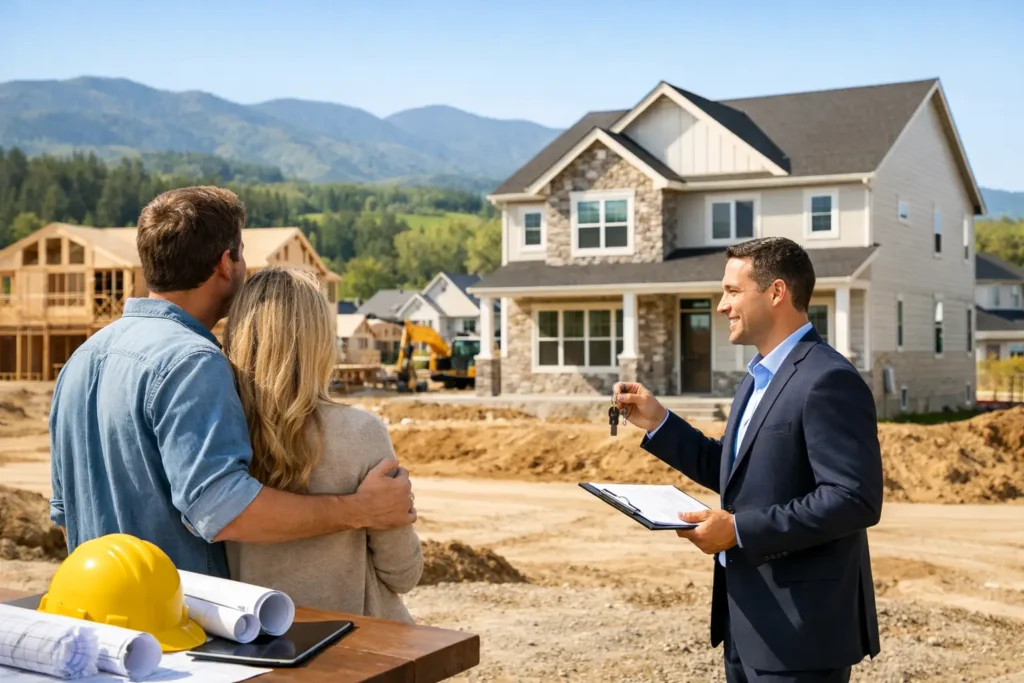
A new home can feel wonderfully simple: fresh paint, clean lines, modern systems, and no prior owner’s repair list waiting for you. But buying new construction is not the same as choosing a finished house from a listing. You may be selecting a lot, reviewing plans, making design choices, and signing a contract before the home is complete. This guide to buying new construction will help you make clear, confident decisions from the first model-home visit to closing day.
For buyers in Crossville, Lake Tansi, Cookeville, Sparta, Baxter, and nearby Cumberland Plateau communities, new construction can be a smart path to a home that fits your lifestyle and budget. The key is knowing what is included, what is still flexible, and what needs to be confirmed in writing.
Start With the Right Type of New Construction
Not every new build follows the same process. A spec home is already underway or complete when you buy it. The builder has chosen many of the finishes, which can make the timeline faster and the decisions easier. If you need to move soon, a spec home may be the better fit.
A semi-custom home gives you a floor plan and a package of choices, then lets you select certain features such as flooring, cabinet color, countertops, or exterior details. A fully custom build offers the most control, but it also requires more time, more decisions, and usually a larger budget cushion.
There is no one right answer. A retiree downsizing to a one-level ranch may value a move-in-ready home with low maintenance. A growing family may prefer to choose bedroom layouts, storage, and finishes before construction begins. Start with your timing, budget, and tolerance for decision-making, then choose the type of build that supports those priorities.
Choose the Location Before the Upgrades
It is easy to get excited about a quartz countertop or a tiled shower. Those features matter, but location will have the longer-lasting effect on your daily life and resale value.
Look at the lot itself. Is it level or sloped? Does it back up to woods, another future building site, a busy road, or a utility easement? Ask whether nearby lots are already sold and what may be built there. A quiet view today can change if a new phase of a neighborhood is planned behind your home.
In the Cumberland Plateau area, buyers should also ask practical questions about drainage, road access, utilities, and soil conditions. Some properties use public water and sewer, while others rely on a well and septic system. If septic is involved, verify the approved bedroom count and understand where the septic field is located before making plans for a pool, garage, garden, or addition.
For lake-area or resort-style communities, review neighborhood rules, dues, amenities, and any rental restrictions. A low purchase price can look very different once association fees, utility connection costs, and required home specifications are added.
Compare the Builder, Not Just the Floor Plan
A beautiful model home is a starting point, not a full picture of the builder’s work. Ask to see completed homes, not only the showroom version. Pay attention to trim work, paint quality, cabinet installation, grading around the home, driveway finish, and how the exterior materials come together.
Ask the builder how they communicate during construction. Will you receive regular updates? Who is your main point of contact? How are change orders handled? A builder who answers these questions clearly can make the process much less stressful.
It also helps to understand the builder’s warranty process. Most new homes include a builder warranty, but coverage periods and exclusions vary. Get the warranty details in writing and ask who handles service requests after closing. A warranty is valuable only when you understand how to use it.
Read the Contract Like It Is Part of the House
The builder’s contract is often different from a standard resale purchase agreement. It may give the builder more control over deadlines, material substitutions, deposits, and the final completion date. Read every section before signing, and do not assume a verbal promise is included just because it was discussed during a walkthrough.
Pay close attention to the purchase price, earnest money, upgrade deposits, financing deadlines, and what happens if your loan is delayed or denied. Find out whether deposits are refundable and under what circumstances. New construction deposits can be substantial, especially when you are selecting custom finishes.
The contract should also spell out what is included. Does the quoted price cover appliances, blinds, landscaping, sod, mailbox, driveway, gutters, garage-door openers, and a final cleaning? Are there allowances for lighting, flooring, or countertops? An allowance is not a guaranteed final price. If your selections cost more than the allowance, you pay the difference.
Build a Budget That Includes the Real Costs
The base price is rarely the final number. Many buyers begin with a comfortable payment estimate, then discover that the features they expected are considered upgrades.
Before you commit, ask for a detailed list of standard features and available upgrades. Compare that list with the model home. Model homes often display premium flooring, upgraded cabinets, designer lighting, landscaping, and larger patios that are not part of the base price.
Plan for closing costs, prepaid taxes and insurance, moving expenses, window coverings, appliances if they are not included, and furniture that fits the new layout. If you are building on your own lot, budget for site work, permits, utility connections, driveway work, surveys, septic, and contingencies. Site costs can vary widely depending on the land.
A little room in the budget is not a luxury. It gives you the ability to handle a necessary change without turning an exciting project into a financial strain.
Keep Your Financing Strong From Contract to Closing
Talk with a lender early, even if construction will take several months. Your lender can explain whether you need a traditional mortgage, a construction-to-permanent loan, or another financing structure based on the builder and the property.
Do not make major financial changes while your home is being built. Avoid opening new credit accounts, financing furniture or a vehicle, changing jobs without discussing it with your lender, or moving large sums of money without documentation. Your financial picture may be reviewed again before closing.
If a builder offers incentives for using a preferred lender or title company, compare the full value of the offer. An incentive can be helpful, but review the rate, fees, and loan terms alongside other options. The best choice depends on the total cost and your comfort with the team, not just one advertised credit.
Inspections Still Matter in a Brand-New Home
New does not mean flawless. Construction involves many people, multiple stages, changing weather, and tight schedules. An independent home inspection is one of the best ways to protect your investment.
If possible, schedule inspections during key stages of construction. A pre-drywall inspection can identify concerns before insulation and wallboard cover plumbing, wiring, framing, and mechanical components. A final inspection before closing checks the completed home and can create a clear punch list for the builder.
Your final walkthrough is not just a formality. Test faucets, lights, outlets, appliances, doors, windows, HVAC operation, garage doors, and exterior drainage. Look for paint touch-ups, damaged surfaces, missing hardware, and incomplete work. Take notes and photos, then make sure agreed repairs are documented.
Make Selections That Will Still Feel Right Later
The best upgrades are usually the ones that are difficult or expensive to add after move-in. Extra outlets, additional lighting, a larger patio, better insulation, upgraded windows, a walk-in shower, and practical storage can improve everyday life for years.
Cosmetic details are more personal. A bold tile or specialty light fixture may be exactly right for you, but consider how long you plan to stay and whether the choice supports your future resale goals. You do not have to design for every future buyer, but a balanced mix of personal style and broadly appealing choices is often wise.
Take samples outside and look at them in natural light. Flooring, paint, and exterior colors can look very different from the design center. Keep your selections organized in one place so you can see how cabinets, counters, flooring, and fixtures work together.
Let Local Guidance Keep the Process Moving
Buying a new build can involve more decisions than buying an existing home, but you do not have to sort through them alone. A local real estate professional can help you compare communities, evaluate lots, ask stronger questions, review what is included, and stay focused on your goals through closing. At 931 Dream Homes, the goal is simple: help you feel informed, supported, and excited about the home you are building.
The right new construction home is more than a fresh set of keys. It is a place that works for your budget, your routine, and the life you want to enjoy in Tennessee. Ask the extra question, get the answer in writing, and give yourself room to choose with confidence.